5 Construction Technology Innovations That Will Change Restaurant Builds in 2026
Ready to serve up a new kind of dining experience? Discover how game-changing advancements are reshaping the way food spaces are created.
Key takeaways:
- Construction technology trends are transforming how restaurant projects are planned and executed.
- Tools like BIM, AI, drones, and prefabrication reduce delays and improve efficiency.
- Adopting the right technologies can lower costs and improve long-term project ROI.
Restaurateurs and construction managers have important things in common. They want to improve efficiency and reduce costs, and they must become tech-savvy professionals to modernize their processes and keep pace with competitors.
But in a rapidly evolving technological landscape, it’s easy to feel uncertain about which advancements to invest in. Telling flash-in-the-pan trends from long-term construction shifts is key to confidently deciding which tech is worth adopting.
Let’s take a practical look at hot topics like BIM, drones, and AI, and see how measurably they’re transforming restaurant construction in areas like collaboration, safety, and cost efficiency.
Adopt Innovations Strategically with RPC
Smart adoption of construction trends, not blindly chasing fads, will pave the way for restaurateurs and construction managers to create more efficient processes and competitive advantages in 2026.
RPC complements our comprehensive knowledge of restaurant construction by leveraging the latest in construction technology to deliver restaurant builds that are financially viable and structurally sound.
We’d love to help you make the right choices for your needs. Get in touch online or give us a call at (904) 241-4416, and let’s build your dream restaurant for 2026!
Why Technology Is Reshaping Restaurant Construction
It’s more important than ever for Florida’s construction managers and restaurateurs to optimize available resources and integrate construction technology trends.
The need is mostly due to two perennial problems that continue to plague the construction industry and, by association, the sectors it serves: material volatility and labor shortages.
Tariffs are still driving price escalation and procurement delays for lumber, metals, and more, while construction labor shortages are the downside of Florida’s robust number of new builds, outnumbering available workers.
These obstacles increase costs and stretch timelines, putting restaurant projects under pressure from Day One.
2026 is the year when modern construction technology can help General Contractors leap traditional hurdles and reshape restaurant builds by providing software and hardware that improve efficiency and overcome human limitations.
Innovation #1 – Building Information Modeling (BIM)
Collaboration and communication define successful builds, so it’s safe to say that BIM is among the construction technology trends destined to become norms.
BIM brings construction stakeholders together in a highly collaborative, three-dimensional space. General Contractors, architects, engineers, and clients all gain from building information modeling benefits, including:
- Improved communication between teams.
- Clash detection, which identifies conflicts early between different aspects of construction, like structural design and utilities.
- Improved safety by virtually stress-testing builds to reveal potential hazards.
- More accurate cost forecasting.
Collectively, these benefits help BIM better manage budgets and reduce the need for mid-project change orders, which are a major cause of budget bloom and construction delays in restaurant projects.
Innovation #2 – AI in Construction Project Management
AI in construction translates to fewer delays and greater visibility into project progress for General Contractors and restaurateurs.
Like BIM, AI assists with risk identification and budget forecasting while offering three other advantages:
- Scheduling optimization.
- Predictive analytics for stronger cross-project projections related to materials, expenses, and more.
- Workflow automation.
By integrating this modern construction technology, contractors and their clients equip themselves with a tool that can dramatically improve their understanding of their restaurant project’s scope and help them avoid costly pitfalls.
Innovation #3 – Drones for Site Monitoring and Inspections
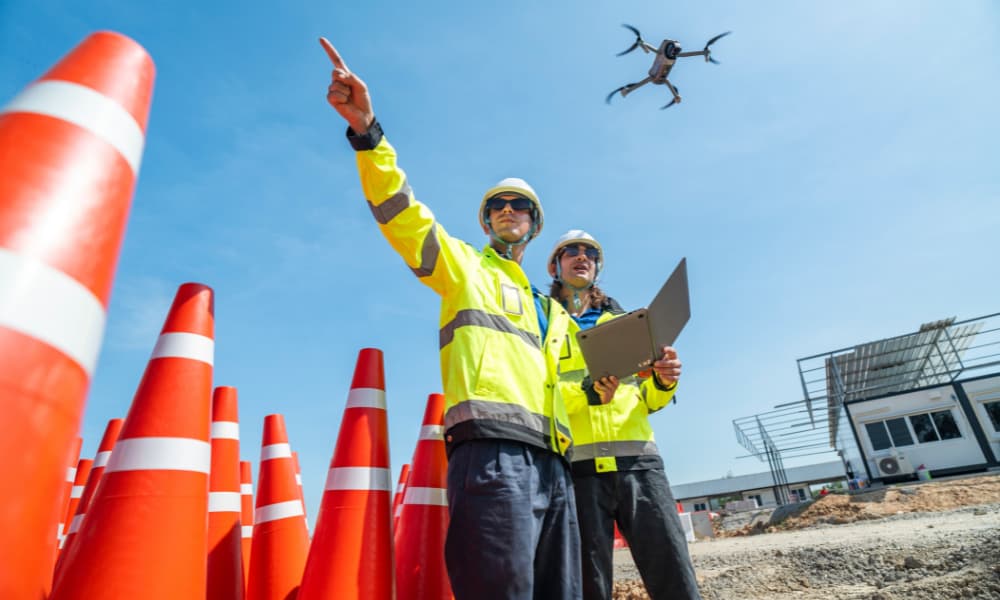
Drones can go higher, move faster, and do it more safely than any construction worker. These aerial allies are increasingly found buzzing around worksites, monitoring progress and spotting potential risks before they become realities.
Here’s how deeply these digital eyes see:
- Light Detection and Ranging (LiDAR) that can penetrate dense undergrowth to better reveal proposed construction surfaces
- Precision topography via GPS and high-resolution photography down to millimeters for more reliable maps and grading.
- Real-time, sitewide data for more accurate documentation and project tracking.
Drones don’t just complement other construction technology trends like AI by helping create safer, faster worksites; they also make roof inspections a breeze!
Innovation #4 – 3D Printing and Prefabrication
3D printing is arguably the winner among modern construction technologies for faster projects, with modular prefabrication being one of this construction technology trend’s greatest strengths.
It allows construction designers to digitally tailor individual rooms, then have them 3D-printed offsite and delivered for immediate integration into the structure.
And it needn’t be whole rooms. Prefabricated wall systems, kitchen components, and other smaller modular assemblies are all possible. 3D printing and prefab not only enable faster builds but also improve consistency when elements must be replicated.
Perhaps the biggest benefit is reduced material waste, which prevents environmental degradation from side effects such as soil and water pollution and air harm from excess CO2 and particulate matter.
Thanks to 3D printing, many of these onsite hazards are now eliminated by some construction processes being handled in offsite facilities, which can better contain and manage them.
Innovation #5 – Smart Construction Equipment and IoT Integration
On-site safety and productivity are prime construction concerns, and smart equipment is greatly improving both. IoT-connected items track work rates and maintenance needs in real time, enhancing sitewide performance and protection.
Here are some examples of how these particular construction technology trends are contributing:
- Computer-connected safety gear like helmets, jackets, and boots that can observe worker surroundings and their biometric data for preemptive monitoring of terrain hazards and health risks.
- Self-driving construction vehicles using GPS and radar to safely navigate sites and transport materials without human drivers.
- Robotic drywall finishers that can do this dust-filled job more safely.
Smart tools further support contractors through more accurate scheduling and resource allocation. The tasks taken over by tech leave human workers free to focus their efforts more productively elsewhere.
Choosing the Right Technologies for Your Restaurant Project
BIM, AI in construction, drones, 3D, and smart solutions represent the Top 5 of today’s transformative tech, and the innovations that are most significantly improving restaurant builds in 2026.
With so many benefits like speed, safety, and cost efficiency to be had, it’s understandable that some restaurateurs want to rush in and make any hot tech part of their next project.
However, making the most of modern construction technology trends takes more than jumping bandwagons; it demands good judgment in knowing what’s best for your needs and your budget.
Working with a reliable restaurant contractor is the smartest way to discern which technologies will truly add value to your project. Speak with an experienced General Contractor who’s well-versed in helping clients evaluate a method’s operational impact, budgetary compatibility, and overall ROI.